Written By :
Category :
Uncategorized
Posted On :
2025-11-17
Share This :

For nearly two decades, Lithuanian families have been raising children in the United Kingdom, navigating an entirely different education system from the one they remember back home. While some parents initially worried that their children might struggle in a foreign school environment, the opposite often turned out to be true: many Lithuanian pupils thrive in British schools — academically, socially, and emotionally.
But why?
What exactly makes the UK school system different from Lithuania’s?
And how do these differences shape the performance, confidence, and overall development of Lithuanian pupils?
This comprehensive guide explores two contrasting educational models, the challenges Lithuanian children face when transitioning into UK schools, and the surprising advantages they carry with them. It also explains why professional English to Lithuanian Translation remains essential for families navigating two very different schooling worlds.
1. A Tale of Two School Systems: Structure vs Flexibility
Lithuanian and British schools share the same fundamental goal: to educate children and prepare them for adult life. But they approach this goal in almost completely different ways.
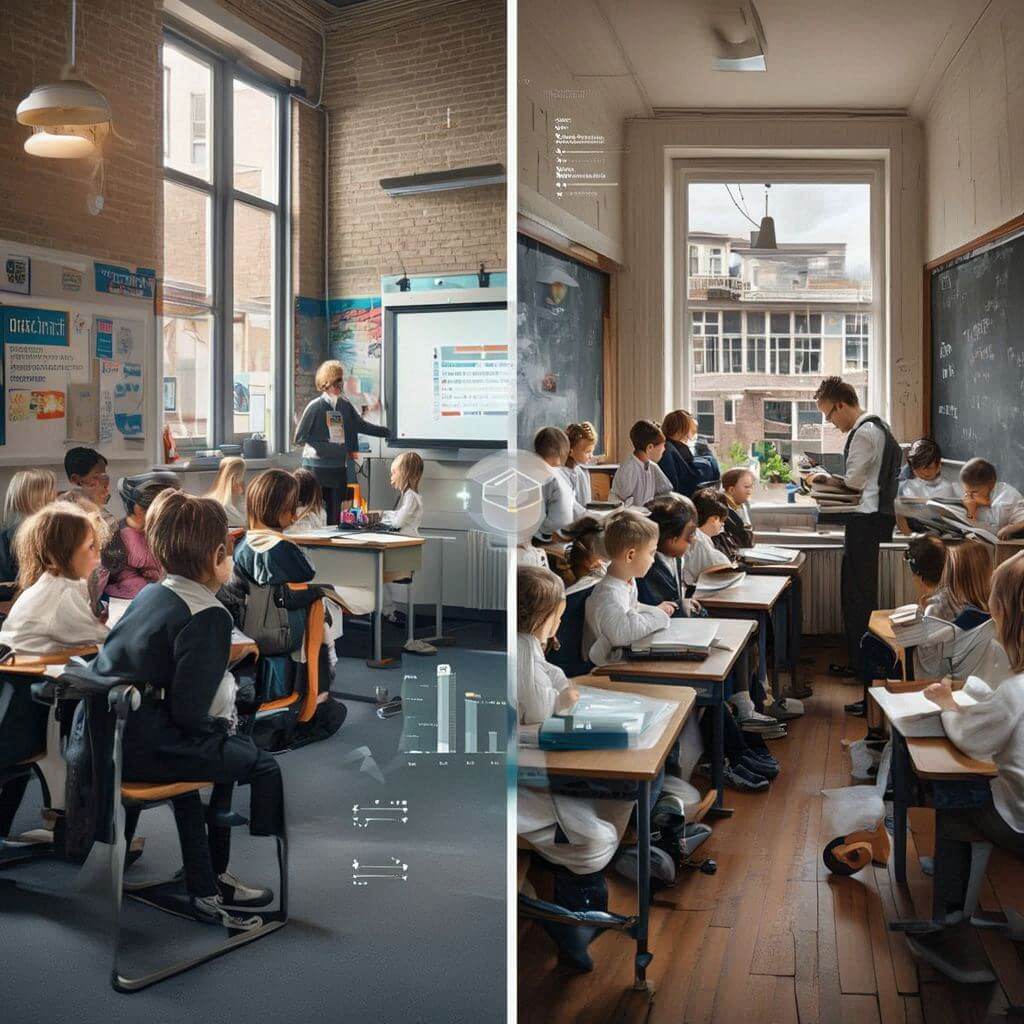
The Lithuanian approach: structure, discipline, and academic rigour
Lithuania’s education system is based on:
- strict rules and routines,
- strong emphasis on academic performance,
- fast-paced curriculum,
- a more formal classroom environment,
- clear teacher authority.
Children in Lithuania typically:
- receive more homework,
- study subjects earlier (especially maths and grammar),
- sit more standardised tests,
- follow a more traditional learning model.
This discipline-based system builds responsibility, focus, work ethic, and strong foundational knowledge — especially in mathematics and sciences.
The UK approach: creativity, emotional well-being, and student-centred learning
British schools, on the other hand, emphasise:
- creativity and problem-solving,
- emotional support and well-being,
- group discussions and collaboration,
- holistic development,
- personalised learning plans.
Children in the UK:
- experience a calmer, more informal learning environment,
- sit on carpets in primary school,
- learn through play, discovery, and discussion,
- are encouraged to express feelings, ideas, and preferences.
This fosters confidence, communication skills, independence, and social-emotional intelligence.
Why Lithuanian pupils adapt surprisingly well
Lithuanian children entering UK schools often show:
- stronger discipline,
- greater academic focus,
- well-developed early maths skills,
- strong reading comprehension habits.
When combined with the UK’s supportive environment, this produces outstanding results.
In other words — Lithuanian structure + UK creativity = educational success.
2. The First Challenge: Entering a UK School with Limited English
Nearly every Lithuanian child arriving in the UK faces the same initial obstacle: English.
Whether the child is 6 or 14, English proficiency becomes the key factor that determines the first months — or even years — of adjustment.
Common issues Lithuanian pupils experience early on:
- Difficulty understanding teacher instructions
- Limited academic vocabulary
- Tiredness from constant translation inside their heads
- Hesitation to speak, fearing mistakes
- Challenges in reading and writing
- Delayed participation in group work
Some teachers misinterpret this as shyness or cognitive delay, but it is almost always a temporary language barrier rather than an academic one.
Parents are often overwhelmed too
Parents receive:
- school reports,
- behaviour notes,
- safeguarding information,
- SENCO documentation,
- letters about assessments or exams.
These documents can be full of professional terminology. This is where Lithuanian translation services play a critical role — helping parents fully understand the school system and support their children effectively.
Automatic translation often fails with terms such as:
- phonics screening,
- Key Stage progression,
- EHCP review,
- attendance coding,
- child protection procedure.
That is why thousands of Lithuanian parents prefer English Lithuanian translation services from experienced agencies like Linguistify.
3. Mathematics: The Secret Superpower of Lithuanian Students
One of the most fascinating observations made by UK teachers is this:
Lithuanian children tend to be exceptionally strong in mathematics.
Why?
The Lithuanian system teaches maths earlier — and more intensely.
In Lithuania, children:
- begin arithmetic earlier,
- use structured textbooks,
- complete regular homework,
- learn multiplication tables thoroughly,
- practise problem-solving frequently.
Meanwhile, in the UK:
- maths begins more slowly,
- practical examples and real-life problem-solving are emphasised,
- less memorisation is required in early years.
As a result:
Lithuanian children entering British schools may appear one or two years ahead in maths skills.
UK teachers often comment:
“My top maths student this year is Lithuanian.”
This advantage boosts confidence and accelerates overall academic integration.
4. Emotional Support: A Major Strength of the UK System
Unlike Lithuanian schools — where emotional support is improving but still developing — UK schools have well-established pastoral care.
UK emotional support includes:
- school counsellors,
- pastoral teams,
- safeguarding officers,
- teaching assistants who support emotional needs,
- mental health programmes,
- anti-bullying strategies,
- small-group interventions.
This framework helps Lithuanian pupils — especially new arrivals — feel safe, understood, and supported.
For many Lithuanian parents, this is eye-opening
Some parents initially feel surprised when a teacher asks:
- “How does your child feel?”
- “Is anything stressing them?”
- “Are they emotionally ready for this step?”
In Lithuania, emotional discussions in schools were not traditionally common.
In the UK, they are part of daily communication.
5. Group Work, Presentations, Creativity: A New World for Lithuanian Children
Lithuanian schools focus more on:
- individual written tasks
- teacher-led instruction
- silent lessons
- memorisation
British schools encourage:
- group discussions,
- team projects,
- creative problem-solving,
- presentations,
- sharing ideas openly.
For new Lithuanian pupils, this can be challenging at first.
They may:
- hesitate to raise their hand,
- avoid answering aloud,
- struggle expressing opinions,
- feel uncomfortable with informal teaching styles.
But over time — often within months — Lithuanian pupils become more confident and expressive.
Parents frequently report dramatic personality growth:
- More independence
- Better communication
- Increased confidence
- Willingness to try new things
6. Communication Between Schools and Parents: Where Translation Becomes Essential
Parents must regularly communicate with teachers, headteachers, SENCO staff, and administrators.
However, many official documents are complex and legally sensitive.
Examples:
- behaviour reports
- safeguarding letters
- NHS referrals
- psychological assessments
- SEN or EHCP plans
- attendance warnings
- exam preparation materials
- disciplinary procedures
Misunderstanding these documents can lead to serious problems, such as:
- missed deadlines
- incorrect information
- misunderstanding school expectations
- lack of support for the child
This is why English to Lithuanian Translation is vital.
Agencies like Linguistify help parents:
- understand every detail,
- avoid miscommunication,
- prepare for school meetings,
- know their rights and responsibilities,
- stay confident navigating the UK system.
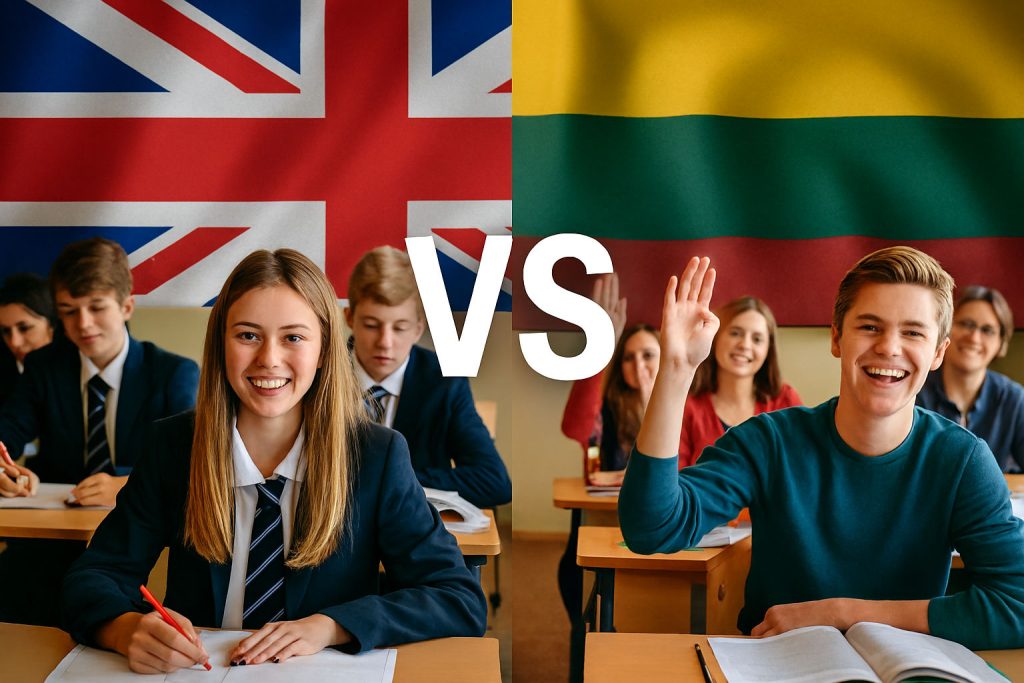
7. Why Lithuanian Pupils Often Succeed in the UK
Once the language barrier reduces, Lithuanian children often flourish because they combine:
Lithuanian strengths
- discipline
- strong early education
- respect for teachers
- responsibility
- reading habits
- solid maths preparation
UK strengths
- creative thinking
- emotional support
- communication skills
- teamwork
- self-expression
- project-based learning
This makes Lithuanian pupils academically resilient and socially adaptable — a powerful combination.
8. Practical Advice for Lithuanian Parents in the UK
1. Keep Lithuanian strong at home
Children who maintain Lithuanian at home learn English faster and better — not slower.
2. Ask teachers for clarity
UK teachers expect questions and appreciate parental involvement.
3. Use professional translation
Especially when dealing with:
- school assessments
- safeguarding
- behaviour reports
- exam details
- psychological evaluations
4. Support English learning through reading
Audiobooks, bedtime stories, and bilingual books help build academic vocabulary.
5. Encourage participation in school activities
Drama clubs, sports, and reading groups accelerate confidence.
9. The Role of Linguistify in Supporting UK-Based Lithuanian Families
At Linguistify, almost all of our work involves English to Lithuanian Translation, especially for families and educational contexts.
We translate:
- school reports
- EHCP plans
- SEN assessments
- medical notes
- council letters
- safeguarding documents
- GCSE and exam information
- school apps and portals
- legal and administrative paperwork
Parents use our Lithuanian translation services not only for convenience — but for accuracy and peace of mind.
When dealing with a child’s education, nothing should be left unclear.
Final Thoughts: Two Systems, One Successful Child
Lithuanian children in the UK have a unique advantage:
they grow up experiencing two different education systems that complement each other beautifully.
The structure and academic foundation of Lithuania + the emotional support and creativity of the UK create well-rounded, confident, and ambitious young people.
And with the help of professional English Lithuanian translation services, parents can navigate both systems smoothly, ensuring their children receive the support they deserve.
